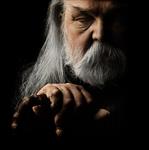
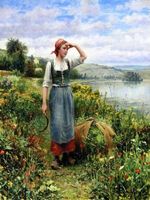
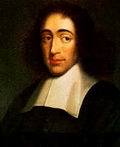
Umetnik je već pohodio ovaj kviz; portretista, kod koga je imaginacija vremenom rasla na uštrb ostalog, toliko da ga osnovano svrstavaju među simboliste.
Tiziano Vecellio...Jelkice...pa evo Ticijana... i njegove venere..
Slika ...The Venus of Urbino, 1538...-...
Tiziano Vecellio
Ticijan Večeli (*1490. - 27. avgust1576.) se smatra najvećim i najplodnijim slikarom Venecije u 16. veku i prvim slikarom koji je imao uglavnom klijente iz inostranstva. Bio je slikar na dvoru Čarlsa V sa kojim je bio u veoma prijateljskim odnosima. Slikao je široki dijapazon motiva - religiozne i mitološke motive, portrete, alegorije i drugo. Ticijan je rođen oko 1490. godine u gradu Pijeve di Kadore u Venetu. Bio je učenik Đovanija Belinija i radio je zajedno sa čuvenim Đorđoneom od 1507. godine. Svoj prvi veliki uspeh ostvario je delom "Vaznesenje Device Marije" oslikanim u crkvi Frari u Veneciji od 1516. do 1518. godine. Dela Mikelanđela i pozne renesanse uticala su na njegove kasnije radove. Ovaj izuzetni slikar je imao veliki broj patrona tokom svog života - od crkava i vlade Venecije do Mantua Gonzage, vojvode od Ferara, za koga je slikao svoje rane radove sa mitološkom tematikom. Takođe je slikao i za moćnu porodicu Urbina i porodicu Pape Pavla III. U svojim poznim godinama slikao je poetične mitološke prizore za kralja Filipa II. Razvio je veoma lični stil kojeg karakterišu raznovrsni i slobodni potezi i tamniji tonaliteti i koji je imao značajan uticaj na slikarstvo narednih vekova.
Tiziano Vecelli or Tiziano Vecellio (c. 1473/1490[1] – 27 August 1576[2] better known as Titian (pronounced /ˈtɪʃən/) was an Italian painter, the leader of 16th-century Venetian school of the Italian Renaissance. He was born in Pieve di Cadore, near Belluno (in Veneto), in the Republic of Venice. During his lifetime he was often called Da Cadore, taken from the place of his birth.
Francesco Vecellio (c. 1485 - 1560) was an Italian painter of the early Renaissance, best known as the elder brother of the painter Titian. In his youth, he was a soldier. As a painter, he was mainly active in 1520-1530s in Cadore. In 1524, he signed an altarpiece for San Vito in Cadore. In 1540s, he painted a polyptych at Candide. In late 1540s he painted the organ shutters of San Salvatore in Venice. He painted an Annunciation for San Nicola di Bari, now in the Accademia.
Piazzetta created an art of warm, rich color and a mysterious poetry. He often depicted peasantry, even if often in a grand fashion. He was highly original in the intensity of color he sometimes used in his shadows, and in the otherworldly quality he gave to the light which throws part of a composition into relief. The gestures and glances of his protagonists hint at unseen dramas, as in one of his best-known paintings, The Soothsayer(1740, now in Gallerie dell'Accademia, Venice). He brought similar elusiveness to works of a religious nature, such as the Sotto in su Glory of St. Dominic in the Church of Santi Giovanni e Paolo.
Also notable are his many carefully rendered drawings of half-length figures or groups of heads. Usually in charcoal or black chalk with white heightening on gray paper, these are filled with the same spirit that animates his paintings, and were purchased by collectors as independent works. He also produced engravings.
After the Binding of Isaac, Sarah, Abraham's wife, died. After taking care of her burial, Abraham went about finding a wife for his son Isaac, who was already 37 years old. He commanded his servant (whom the Torah commentators identify as Eliezer of Damascus) to journey to his birthplace of Aram Naharaim to select a bride from his own family, rather than engage Isaac to a local Canaanite girl. Abraham sent along expensive jewelry, clothing and dainties as gifts to the bride and her family. If the girl had refused to follow him, Abraham stated that Eliezer would be absolved of his responsibility.
Eliezer devised a test in order to find the right wife for Isaac. As he stood at the central well in Abraham's birthplace with his men and ten camels laden with goods, he prayed to God:
"Let it be the the maiden to whom I shall say, 'Please tip over your jug so I may drink,' and who replies, 'Drink, and I will even water your camels,' her will You have designated for Your servant, for Isaac" (Genesis 24:14).
To his surprise, a young girl immediately came out and offered to draw water for him to drink, as well as water to fill the troughs for all his camels. Rebecca continued to draw water until all the camels were sated, proving her kind and generous nature and her suitability for entering Abraham's household.
Eliezer immediately gave her a golden nose ring and two golden bracelets (Genesis 24:22), which Rebecca hurried to show her mother. Seeing the jewelry, her brother Laban ran out to greet the guest and bring him inside. Eliezer recounted the oath he made to Abraham and all the details of his trip to and meeting with Rebecca in fine detail, after which Laban and Bethuel agreed that she could return with him. After hosting Eliezer and his men overnight, however, the family tried to keep Rebecca with them longer. Eliezer insisted that they ask the girl herself, and she agreed to go immediately. Her family sent her off with her nurse, Deborah (according to Rashi), and blessed her, "Our sister, may you come to be thousands of myriads, and may your offspring inherit the gate of its foes."
"Something of what he aimed at in painting may be summed up by his version of Rebecca at the Well, forceful enough a contrast with Pellegrini's earlier treatment of the subject. Here there is no attempt at the graces of style, and the scene is treated in what may be described as a bourgeois manner: Rebecca and her companions become peasant girls while Abraham's old servant is a rather dashing cavalier in Caravaggesque costume - and we might seem to be witnessing a rustic seduction. This 'genre' treatment is, in one way, more 'real' than Pellegrini's treatment, and it leads into the essays in pure genre subjects, which Piazzetta also practised. The painter has once again by-passed the actual biblical subject and ignored whatever religious overtones are to be supposed to be present in it. Not only grace and lightness are absent here, but also decorum. In the hands of a painter like Poussin the subject had been grave and even touching; Rebecca had heard the commission with the attention and pose of the Virgin Annunciate. French eighteenth-century critics coming to Venice found Piazzetta's lack of dignity extraordinary, even while they quite liked his work. Although he returned in some sense to the seventeenth century, it was not to those academic standards in which, for example, a king was kingly and a hero heroic. Of Piazzetta's King Darius Cochin remarked with dismay that he had 'the air of a sailor'. Nor would he have been less dismayed had he seen the lowering of social and religious tone shown in the Rebecca.
Thus, while one aspect of religious painting in Venice at the time exalts the theme into the superhuman sphere (apotheoses and glories and visions), another aspect is represented by the isolated art of Piazzetta, which depresses or, rather, fuses piety into common humanity."
Michael Levey, Painting in Eighteenth Century Venice
Potrudila sam se da potvrda odgovora ne zaostaje baš mnogo za odgovorom.
Slikar koji je i u motive sa socijalnom tematikom umeo da ubaci ironiju, po oštrini vrlo blisku satiri. Poznati su i portreti velikih pisaca, njegovih sunarodnika. Motiv, detalji i "mizanscen" ove slike ukazuju i na nacionalnost našeg autora.
Vasily Perov got his education in the provincial Arzamass School of Art. During 1853 - 1861 Perov studied at the Moscow School of Painting, Sculpture, and Architecture. 1862 - 1864 He lived in Paris, studying art. After coming back Perov became a founding member in the Circle of the Itinerants. In 1886 Vasily Perov received a title of member of the Petersburg Academy of Arts.
This Russian Artist is known for his genre scenes and portraits.
Slika...The Refectory,1865-76...''Rucak u manastiru...
On this canvas Perov showed social and moral problems in society. The artist of high standards and sincere beliefs couldn't tolerate the failings of the priesthood. He depicted their greed, gluttony, indifference to the poor, servility to the rich. His style is simplified but it's an outstanding example of critical realism in Russia...
Vasily Grigorevich Perov (Russian: Василий Григорьевич Перов) (real name Vasily Grigorevich Kridener) (January 2, 1834 (December 21 1833 Old Style) - June 10 (May 29 Old Style) 1882) was a Russian painter and one of the founding members of Peredvizhniki, a group of Russian realist painters.
Vasily Perov was born January 2, 1834 (December 21 1833 Old Style) in Tobolsk, being the illegitimare son of procurator, baron Grigory Karlovich Kridener. After completing a course at Arzamas uezd school, he was transferred to the Alexander Stupin art school also located in Arzamas. In 1853 he was admitted to the Moscow School of Painting, Sculpture and Architecture, where he learned from several renowned artists.
Перов намеренно прибегает к назидательно сатирическим контрастам. Огромный крест с распятым Спасителем и гуляющая, пьяная монастырская братия, которой, кажется, вовсе нет дела до Христа. Объедающиеся монахи и нищенка с голодными детьми, безнадежно тянущая руку за подаянием. А рядом важный сановник с чванливой барыней и угодливо склонившийся перед ними батюшка, рассчитывающий на большие пожертвования в монастырь.
Прямолинейность, нарочитость трактовки сцены и действующих лиц обусловливают тот социальный дидактизм, который присущ критическому реализму передвижников. Вместе с тем типичность образов и воспроизведенной обстановки, а также конкретность бытовых деталей убеждают зрителя в достоверности изображенной сцены, несмотря на то, что она показана односторонне.
Лагорио, Лев Феликсович - пейзажист (1827 - 1905). Учился в Академии Художеств; получил золотые медали за "Вид в окрестностях Выборга" и "Вид на Лахте, близ Санкт-Петербурга". На Кавказе занимался изучением горной природы. Восемь лет пробыл в Италии. За привезенные оттуда картины: "Фонтан Аннибала, в Рокка-ди-Папа" (в Третьяковской галерее), "Капо-ди-Монте, в Сорренто" (в музее академии) и "Понтинские болота" получил, в 1860 г., звание профессора. Во время вторичной поездки на Кавказ ему привелось участвовать в делах против горцев. В 1885 г., получив Высочайший заказ на несколько картин на сюжеты из русско-турецкой войны, посетил театр военных действий в Европейской и Азиатской Турции. Кроме многочисленных картин, писанных масляными красками, Лагорио писал акварельные рисунки, преимущественно исполненные сепией и инком. В музее Александра III - "Вид на взморье" (1872), в Третьяковской галерее - "Нормандский берег", "Батум" и др.
Lev Feliksovich Lagorio (Russian: Лев Феликсович Лагорио; 1828 - 1905) was a Russian painter, famous for his paintings of seascapes.
Lagorio was born in Feodosia and later studied in the Imperial Academy of Arts in Saint Petersburg. His teachers were Maxim Vorobiev and B. P. Villeval'de. While he lived in Feodosia, he was influenced by the painter Ivan Aivazovsky. In 1845 Lagorio went on a sea voyage on the warship Groziashchy to study the arrangement of the ship.
Ukupno su 225 korisnika na forumu :: 15 Registrovanih, 1 Sakrivenih i 209 Gosta :: [ Administrator ] [ Supermoderator ] [ Moderator ] :: Detaljnije Najviše korisnika na forumu ikad bilo je 972 - dana 26 Okt 2008 13:06 Korisnici trenutno na forumu: Brano, Da vam Bata nešto kaže..., despot77, grbe, ivanzj, juba, kole017, maha, miron, MSMarkoN, oblak, Ričard, Sirius, tmst, Žan Klod vam dam
Stranica generisana za 0.062 sec [0.048003 sec (user time) + 0 sec (system time)] Skripta zauzela u memoriji: 2.492.024 bajta
Svaki korisnik ovog sajta je odgovoran za sadržaj svoje poruke koju objavi na sajtu. Sajt se odriče svake odgovornosti za sadržaj tih poruka.
Postavljanjem vaše poruke ili vašeg autorskog dela na ovaj sajt, saglasni ste da ovaj sajt postaje distributer vašeg dela, i odričete se mogućnosti njegovog povlačenja ili brisanja, bez saglasnosti uprave sajta.
Distribucija sadržaja sa ovog sajta je dozvoljena samo u nekomercijalne svrhe, uz obaveznu napomenu da je sadržaj preuzet sa ovog sajta, i uz obavezno navođenje adrese MyCity sajta. Za sve ostale vidove distribucije obavezni ste da prethodno zatražite odobrenje od vlasnika MyCity sajta.
MyCity pokrenuo, administrira i razvija Predrag Damnjanović, a o uređenju sajta se brine MyCity Tim.
Ukoliko želite da nas kontaktirate kliknite ovde.