|
Altruistic Armadillos, Zenlike Zebras: A Menagerie of 100 Favorite Animals
by Jeffrey Mousaieff Masson
Ballantine Books (1745 Broadway, New York, NY 10019), 2006
429 pages, hardcover. $ 27.95.
This is a collection of 100 short essays, each about a different animal. Beyond describing the appearance and habits of the subject animals, psychologist turned author Jeffrey Mousiaieff Masson wants to know what kind of "person" each animal is.
Seeking personality in animals is a challenge, requring much research, but Masson has proved equal to it.
For instance, Masson relates how Australian magpie researcher Gisela Kaplan has discovered that magpies play-fight with human friends just like a playful puppy, pretending to be angry. During these play-fights they roll over and expose their bellies to express submission, just as dogs do.
Badgers have shown human-like rituals around death. Masson describes how one badger sow who lost her mate made a mournful sound that brought a male out from another sett. Together they dragged the dead body to a warren, buried it, and then separated.
Masson also reveals surprising aspects of biology. Jellyfish, for example, like butterflies and caterpillars, go through two completely different stages of life: the free swimming bell-like shape that we all recognize, and a phase as a polyp attached to a stem. The venom of some species can be lethal to humans. And they are not all blind, as one might suppose. Six sets of four eyes provide the box jellyfish with superb vision.
These and other surprising scientific truths leap out of the pages at every turn, showing how little we really know about the other life forms who inhabit our planet (other than how to kill and eat them).
Anticipating from the title that we would be reading about fluffy animals such as the panda bear, we found, to our delight, that Masson covers an eclectic mix of creatures, from the charismatic--such as gorillas, lions, and elephants--to the common--including chickens, sheep, and cows--the obscure-- including pearl oysters and glow worms--and even the mythical, represented by the yeti.
Since our experience is with African wildlife, we looked critically at the chapters on lions and meerkats. We found no glaring errors. Masson correctly describes male African lions as lazy, but he might be faulted for leaving the impression that they are useless except for reproduction. Masson might have noted how essential large males are to protecting lion prides from competition from other large predators. For instance, lionesses can be terrorized by spotted hyena clans, in the absence of large males who are able to kill them.
--Chris Mercer & Beverley Pervan
[Link mogu videti samo ulogovani korisnici]
jos jedna interesantna knjiga od Mason-a i drugih autora...
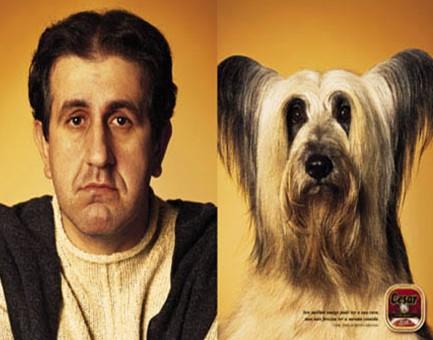
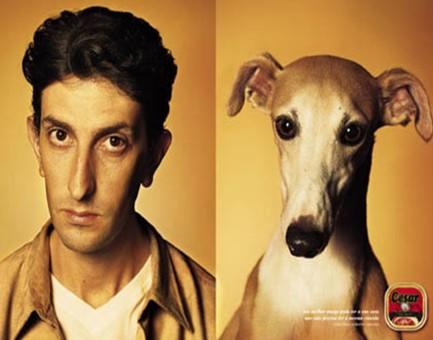
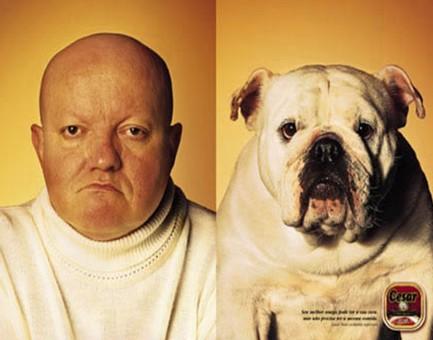
koliko nas lici na neke od zivotinjskih vrsta...koliko li nam to samo govori o nasem karakteru...a koliko tek kucni ljubimci, pogotovo psi...pocinju da lice na svoje vlasnike...ili mozda vlasnici vremenom postaju poput svojih pasa? 
|