|
|
|
|
Sponzor ovog foruma:
|
|
|
|
|
Poslao: 18 Mar 2007 23:49 |
|
|
|
|
Deep Purple
Deep Purple is the name of a British rock group, and is also the name of a song composed by Peter De Rose, from which the band borrowed its name. They are one of the first and most famous hard rock bands. They are considered pioneers of heavy metal, though have never considered themselves a heavy metal band.
Pre-History
The band Episode Six released several singles in the UK during the mid-sixties. It featured Ian Gillan on vocals, Graham Dimmock on guitar, Roger Glover on bass, Tony Lander on guitar, Sheila Carter on keyboards, and Harvey Shields on the drums. Despite extensive touring, they never had their big break.
In 1967, a band called The Flowerpot Men and their Garden was formed, formerly known as The Ivy League. It was concentrated on a trio of singers. The new name was clearly derived from the children's show The Flowerpot Men, with the obvious psychedelic-era puns on flower power and "pot". The band's most popular song was "Let's Go To San Francisco." Some listeners assumed that the song was a parody of Scott McKenzie's "If You're Going to San Francisco," but the band has denied this. It featured Tony Burrows, Neil Landon, Robin Shaw, and Pete Nelson on vocals, Ged Peck on guitar, Nick Simper on bass, Jon Lord on organ, and Carlo Little on drums. Jon Lord had formerly played in The Artwoods, Nick Simper had been with Screaming Lord Sutch's The Savages, where he also played with guitarist Ritchie Blackmore.
The Dawn of Purple
In 1967, former Searchers drummer Chris Curtis contacted London businessman Tony Edwards in the hope that he would manage a new group he was putting together. Curtis’ idea was that the members of the group would get on and off a musical roundabout, and suitably impressed, Edwards agreed to finance the venture with a couple of business partners, John Coletta and Ron Hire (Hire-Edwards-Coletta – HEC Enterprises).
Curtis then set about building up the group, to be known as Roundabout. His first encounter was with Hammond organ player Jon Lord, then he persuaded session guitarist Ritchie Blackmore to return from Hamburg, Germany, to audition for the new group. Curtis himself, however, soon dropped out, but HEC Enterprises, as well as Lord and Blackmore, were keen that the project should continue, so firstly bassist Nick Simper, then finally vocalist Rod Evans and drummer Ian Paice (both of whom were from the group The Maze), were recruited. After their first few gigs on a brief tour of Denmark in the spring of 1968, the band agreed on a new name suggested by Ritchie – Deep Purple.
In October 1968, the group had tremendous success in the US (but not the UK) with a cover of Joe South's "Hush," taken from their debut album Shades of Deep Purple, and they were duly booked to support Cream on their Goodbye tour. However they were soon kicked off the tour, allegedly because they were upstaging the headlining act! In 1969, two more albums followed: The Book of Taliesyn and Deep Purple, the latter of which contained a symphony orchestra on some tracks. After these three albums and extensive touring in the States, Rod Evans and Nick Simper were unsummarily sacked, and replaced by vocalist Ian Gillan and bassist Roger Glover both ex-Episode Six. This would create the quintessential Deep Purple "Mark 2" lineup. Initially, this version of the band released a single probably influenced by the then-popular stage musical "Hair", a cover of a Greenaway-Cook tune titled "Hallelujah", which flopped, and then the Concerto for Group and Orchestra, a three-part movement written by Lord and performed at the Royal Albert Hall with the London Philharmonic Orchestra conducted by Malcolm Arnold. Together with Five Bridges by The Nice, it was one of the first collaborations between a rock band and an orchestra, although at the time, certain members of Purple were less than happy at the group being tagged as "a group who played with orchestras" when actually what they had in mind was to develop the band into a much tighter, hard-rocking style.
Top of the World
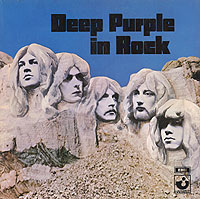
Shortly after the orchestral release, the band began a hectic touring and recording schedule that was to see little respite for the next three years. Their first LP release, in mid-1970, went straight for the jugular in with "Deep Purple in Rock" and a UK Top Ten single followed with "Black Night". A second album, "Fireball", was issued in 1971, and the band also scored another chart hit with "Strange Kind Of Woman". Together with Led Zeppelin and Black Sabbath, Purple were laying the groundwork for what is now called heavy metal music, although at the time, the phrase was still to be coined.
During 1972, Deep Purple continued to tour and record at a rate that would be rare thirty years on, releasing Machine Head, an album that was due to be recorded at a casino in Montreux, using the Rolling Stones mobile recording truck, but after an arson attack during a Frank Zappa gig at the very same casino was actually recorded at a nearby hotel - this incident famously inspiring the writing of "Smoke on the Water". This album was followed a few months later by a live release, Made in Japan mostly recorded at two gigs in Osaka, which is today still one of rock music's most popular live concert recordings, although at the time, it was perhaps seen as less important when only two band members turned up to mix it!
The classic Purple Mk 2 line-up continued to work and record into 1973, releasing the album Who Do We Think We Are (1973), featuring the hit single Woman from Tokyo, but tensions within the band were more noticeable than ever. The bad feeling culminated in Ian Gillan quitting the band after another European tour, and Roger Glover being pushed out with him. Their replacements were an unknown singer from the North of England, David Coverdale, and bassist Glenn Hughes, formerly of Trapeze. This new line-up continued into 1974 with the heavy blues/rock album Burn, another highly successful release. Hughes and Coverdale added a funky R&B/soul element to the band's music, a sound that was even more apparent on the 1974 release Stormbringer. Blackmore was not happy with the results, and as a result left the band in 1975 to form his own band Rainbow.
With Blackmore's departure, Deep Purple was left to fill one of the biggest vacancies in rock music. The gap was filled by American Tommy Bolin who had established himself with acts such as Zephyr, James Gang and Billy Cobham, with whom Bolin made his mark on the jazz fusion Spectrum album. On the face of it Bolin was just what the doctor ordered. However the subsequent album, 1975's Come Taste the Band, for all its quality, proved unpopular with die-hard fans and didn't attract any new ones, especially since it departed radically from the expected Deep Purple sound. Bolin himself turned out not to be ready for the daunting job of filling Blackmore's shoes, suffering hostility from some crowds while turning in erratic performances varying from the scintillating to the mundane. Bolin also had a drug habit, heroin, which made matters all the worse. After a particularly traumatic tour to promote Come Taste the Band, the band broke up. Later Tommy Bolin died of a heroin overdose in Miami whilst on tour supporting Jeff Beck.
Subsequently, most of the past members of Deep Purple would go on to have considerable success in a number of other bands including Rainbow, Whitesnake and Gillan, while there were a number of promoter-led attempts to get the band to reform, especially with the revival of the hard rock market in the late 70s/early 80s.
The Reunions
In 1980, Rod Evans, along with a group of unknown musicians, toured under the banner of Deep Purple. As the only original member, and one little known to most fans, this band was instantly derided by press and fans as a fraud. The lineup performed concerts in Mexico and the USA before legal action was taken to deny them the use of the name. In retrospect, however tenuous the connection this band had to the name "Deep Purple", at least it kept the name alive and in the media, albeit briefly.
However, in April 1984, eight years after the demise of Deep Purple, a full-scale (and legal) reunion happened. It was announced on BBC radio's The Friday Rock Show that the "classic" early 70s line-up of Blackmore, Gillan, Glover, Lord, and Paice was reforming and recording new material. The band signed a deal with Polydor in Europe and Mercury in North America. The album Perfect Strangers was released in October 1984 and the tour followed, starting in New Zealand and winding its way across the world into Europe by the following summer. It was a tremendous success. The UK homecoming proved mixed as they elected to play just a single festival show at Knebworth (with main support from The Scorpions). The weather was famously bad but 80,000 turned up anyway.
The line-up recorded and toured The House of Blue Light in 1987 though to lower sales, a live album Nobody's Perfect (1988) was culled from several shows on this tour. While in the UK a new version of "Hush" was released to mark 20 years of the band. In 1989, Ian Gillan was fired from the band, as his relations with Blackmore soured. His replacement was former Rainbow vocalist Joe Lynn Turner. This line up recorded just one album, Slaves & Masters (1990), and toured in support of it. Despite the renewed excellence of the band during this period, many fans were not pleased with Turner, preferring Gillan.
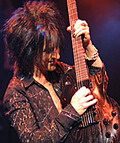
With the tour done, Turner was forced to go as Lord, Paice, Glover, and the record company wanted Gillan back in the fold. Blackmore relented and the classic line-up recorded The Battle Rages On in 1993. During an artistically successful European tour during the fall of 1993, tensions between Gillan and Blackmore came to a head yet again. Blackmore walked out in November 1993, never to return and leaving the band in a fix. Joe Satriani was drafted in, so the live dates (in Japan) in December could be completed. Satriani stayed on for a European Summer tour in 1994, Satriani was never asked to stay permanently although he had wished it. The band unanimously chose Dixie Dregs guitarist Steve Morse to become Blackmore's permanent successor.
Revival
Steve Morse’s arrival thoroughly revitalised the band as he is cited one the best and most accomplished modern guitarists. In 1996 the band released the critically acclaimed Purpendicular, which brimmed with confidence and ideas. Deep Purple enjoyed success throughout the rest of the 1990s, releasing Abandon in 1998, and touring with renewed relish, playing a setlist which was probably more adventurous and eclectic than ever before. In 1999, Jon Lord, with the help of a fan who was also a musicologist and composer, painstakingly recreated the Concerto for Group and Orchestra, and it was once again performed at the Royal Albert Hall in September 1999, this time with the London Symphony Orchestra conducted by Paul Mann. The concert also featured songs from each member’s solo careers, as well as a short Deep Purple set, and the occasion was commemorated on the 2000 album In Concert with the London Symphony Orchestra.
Much of the next few years was spent on the road via constant touring. The group continued forward until 2002, when venerable founding member Jon Lord (who, along with Ian Paice, was the only member to be in all incarnations of the band) announced his amicable retirement from the band to pursue personal projects (especially orchestral work). Rock keyboard veteran Don Airey (Rainbow/Whitesnake, etc.), who had helped Purple out when Lord was injured in 2001, joined the band. In 2003, Deep Purple released their first studio album in five years, the highly praised (but controversially titled) Bananas, and began touring in support of the album immediately. In October of 2005, the band's 37th year, Purple released Rapture of the Deep, which, although recorded in just a few weeks, proved to be the most progressive and adventurous album for many years, and it is being followed by yet another extensive world tour.
Deep Purple and Heavy Metal
Despite their association with the sub-genre, Deep Purple have never been a heavy metal band, though many later heavy metal bands cite their influence. The group has frequently changed styles and line-ups over the years, but has always included virtuoso players in its ranks and placed a high priority on musicianship. Some incarnations of Deep Purple have brought aspects of jazz and classical influences to a rock context due to their frequent use of their songs as vehicles for extended and sophisticated solos.
Today, Deep Purple steadfastly carries on in the studio and around the globe as one of history's most prolific, longest-lived, and hardest touring rock 'n roll bands.
Personnel and discography
The various line-ups in the history of Deep Purple are referred to by fans and the band themselves by "Mark" numbers (abbreviated as Mk I, Mk II, etc.) The "gap" in the numbering, Mk VI, refers to the series of concerts performed with Joe Satriani on guitar, when Ritchie Blackmore quit the band halfway through the tour in 1994. This is the only lineup for which no official recordings have yet been released.
Studio Albums
* Mk I
o Shades of Deep Purple, September 1968 #24 US
o The Book of Taliesyn, December 1968 #54 US
o Deep Purple, November 1969 #162 US
* Mk II
o Deep Purple in Rock, June 1970 #4 UK, #143 US
o Fireball, September 1971 #1 UK, #32 US
o Machine Head, March 1972 #1 UK, #7 US
o Who Do We Think We Are, February 1973 #4 UK, #15 US
* Mk III
o Burn, February 1974 #3 UK, #9 US
o Stormbringer, December 1974 #6 UK, #20 US
* Mk IV
o Come Taste the Band, October 1975 #19 UK, #43 US
* Mk II, reunited
o Perfect Strangers, November 1984 #5 UK, #17 US
o The House of Blue Light, January 1987 #10 UK, #34 US
* Mk V
o Slaves & Masters, October 1990 # 45 UK, #87 US
* Mk II, again reunited
o The Battle Rages On, July 1993 #21 UK, #192 US
* Mk VII
o Purpendicular, February 1996
o Abandon, May 1998
* Mk VIII
o Bananas, August 2003
o Rapture of the Deep, October 2005
Live Albums
* Mk II
o Concerto for Group and Orchestra, 1969
o Gemini Suite Live, 1970 (released 1998)
o Scandinavian Nights, 1970 (released 1988)
o Made in Japan 1972, #16 UK, #6 US
o Deep Purple In Concert, 1970-1972 (released 1980) #30 UK
* Mk III
o Made in Europe, 1975, #12 UK, #148 US
o Live in London, 1974 (released 1982), #23 UK
o California Jamming: Live at the California Jam, 1974 (released 1996)
o Mk III: The Final Concerts, 1975 (released 1996)
* Mk IV
o Last Concert in Japan, 1976
o On the Wings of a Russian Foxbat = King Biscuit Flower Hour, 1975 (released 1995)
o This Time Around: Live in Tokyo, 1975 (released 2001)
* Mk II, reunited
o Nobody's Perfect, 1987 (released 1988) #38 UK, #105 US
o In The Absence of Pink: Knebworth 85, 1985 (released 1991)
o Come Hell or High Water, 1993, (released 1994)
o Live In Europe 1993, 1993 (4-CD box set - due for release March 2006)
* Mk VII
o Live at the Olympia '96, 1996 (released 1997)
o Total Abandon: Live in Australia, 1999
o In Concert with the London Symphony Orchestra, 1999
Compilation Albums
* Purple Passages, September 1972; # 57 US
* 24 Carat Purple, July 1975; #14 UK
* The Mark II Purple Singles, April 1979; #24 UK
* When We Rock, We Rock, and When We Roll, We Roll, 1978
* Deepest Purple: The Very Best of Deep Purple, July 1980; #1 UK, #148 US
* The Anthology, June 1985; # 50 UK
* 30: Very Best of Deep Purple, October 1998; #39 UK
* Listen, Learn, Read On, October 29, 2002 (6 disc box set)
* Winning Combinations: Deep Purple and Rainbow, 2003
* Deep Purple: The Platinum Collection, 2005
Hit singles
* 1968 "Hush" #4 US
* 1968 "Kentucky Woman" #38 US
* 1969 "River Deep - Mountain High" # 53 US
* 1970 "Black Night" #2 UK, # 66 US
* 1971 "Strange Kind of Woman" #8 UK
* 1971 "Fireball" #15 UK
* 1972 "Never Before" #35 UK
* 1973 "Smoke on the Water" #21 UK (1977 release), # 4 US
* 1973 "Woman From Tokyo" # 60 US
* 1974 "Might Just Take Your Life" # 91 US
* 1977 "New Live and Rare EP" #31 UK (including an unheard live version of Black Night)
* 1978 "New Live and Rare EP II" # 45 UK
* 1980 "Black Night" (reissue) # 43 UK
* 1980 "New Live and Rare EP III" # 48 UK (including Smoke on the Water)
* 1985 "Knocking at Your Back Door" # 61 US
* 1985 "Perfect Strangers" # 48 UK
* 1985 "Knocking at Your Back Door / Perfect Strangers" # 68 UK
* 1988 "Hush" (re-recording) # 62 UK
* 1990 "King Of Dreams" # 70 UK
* 1991 "Love Conquers All" # 57 UK
* 1995 "Black Night" (reissue) # 66 UK (remastered CD single)
----------- Dopuna: 18 Mar 2007 23:49 ---------
Evo i na sprskom:
Ne mozemo da pricamo o Hard and Heavy muzici a da ne spomenemo jedne od pionira ove muzike - Deep Purple.
Ova legendarna Britanska grupa je osnovana u Londonu, 1968. Prica o bendu pocinje 1697 kada je bubnjar grupe Searchers osnovao bend po imenu Roundabout u kome su svirali Jon Lord (klavijature), Ritchie Blackmore (gitara), ali je Curtis ubrzo napustio bend. Lord i Ritchie su odlucili d atreba da nastave sa radom i grupi se pridruzuju basista Nick Samper, bubnjar Ian Paice i pevac Rod Evans. Grupe je dobila ime Deep Purple po istoimenoj pesmi Peter de Rose koja je bila omiljena pesma Blackmor-ove bake. Grupa je sa izdavanjem Debi albuma - Shades of deep purple postala popularna u Americi zbog obrada pesama Help, Hey Joe i posebno Hush. Odmah je usledio The Book of Taliesyn album i naredne godine (1969) album Deep Purple. Nakon izdavanja treceg albuma iz grupe su izbaceni Samper i Evans, a zamenili su ih Ian Gillan kao vokal i basista Roger Glover.
1970. bend u ovoj postavi izdaje album In Rock na kome se nalazi jedna od himna ove grupe Child In time. Grupa je sa ovim albuma krenula putem slave i 1971 je izdala album Fireball[/b] na kojima su se nalazili singlovi Fireball i Strange Kind of woman sa kojima su stali rame uz rame sa grupama Led Zeppelin i Black Sabbath
Ono sto je usledelo 1972. godine je [i]Machinehead na kome se nalazi pesma snimljena u Rolling Stones Mobile studiju u Montreaux gde je Frank Zappa drzao koncert u jednom kazinu koji je izgorao jer ga je neki idiot sa bakljom spalio do zemlje...zvuci poznato...naravno to je ultimativni hit, pesma sa najprepoznativljijim i najpevljivijim rifom - Smoke on the water.
Album je propracen svetskom turnejom sa koje je izdat live album Made in Japan.
1973. izlazi Who Do We Think We Are album i on oznacava odlazak Gilana i Glover iz benda. Ali bend se nije raspao vec je dobio nove muzicare - Basistu Glen Hughes-a i mladog pevaca David Coverdale-a sa kojima bend izdaje albume Born i Stormbringer sa kojih se izdvajaju pesme "Lady Double Dealer", "The Gypsy", i. "Soldier Of Fortune". Iz ovog perioda poznat je koncert - California Jam na kome je Ritchie gitarom slomio kameru koja je snimala koncert. Blackmore je bio nezadovoljan ovom postavom i napustio bend kako bi osnovao Rainbow.
Bend je na Blackmore-ovo mesto doveo gitaristu Tommy Bolin-a koji je 1975 napustio bend zbog problema sa drogom. (Decembra 1976 je preminuo u svojoj 25-oj godini).
Sledi period u kome Deep Purple vise ne postoji - Blackmore svira u Rainbow-u, Ian Gillan peva jedno vreme u Black Sabbathu zatim pocinje solo karijeru (isti slucaj i sa Glenn Hughes-om), a COverdale osniva grupu Whitesnake.
Aprila 1984, BBC Radio je objavio da Blackmore, Gillan, Glover, Lord, i Paice ponovo jasu pod zajednickim imenom - Deep Purple i odmah aprila te godine su izdali album Perfect Strangers. 1988 je izasao album Nobody's Perfect . 1989 Gilana je zamenio Joe Lynn Turner koga fanovi nikad nisu prihvatili i koji je najuren iz benda od strane ostalih clanova benda. ian Gilan se vratio iz benda i 1993 izdaju The Battle Rages On koji je poslednji album na kome su radili Gilan i Blackmore zajedno jer je te godine Ritchie najuren iz benda, a zamenio ga je privremeno Joe Satriani da bi 1994 gitarista Steve Morse postao trajna zamena Rotchie Blackmore-a. Bend je u ovoj postavi izdao jos dva albuma, a 2002 je iz benda otisao Jon Lord koga je zamenio klavijaturista grupe Rainbow i Ozzy Osbourne - Don Airey sa kojim i dan danas rade i nastupaju.
Diskografija
Shades of Deep Purple 1968
The Book of Taliesyn 1969
Deep Purple 1969
In Rock 1970
Fireball 1971
Machine Head 1972
Who Do We Think We Are 1973
Burn 1974
Stormbringer 1974
Come Taste the Band 1975
Perfect Strangers 1984
The House of Blue Light 1987
Slaves & Masters 1990
The Battle Rages On 1993
Purpendicular 1996
Abandon 1998
Bananas 2003
Rapture of the Deep 2005
Rapture of the Deep Special 2CD Edition 2006
|
|
|
|
|
|
|
|
Registruj se da bi učestvovao u diskusiji. Registrovanim korisnicima se NE prikazuju reklame.
| |
|
Poslao: 19 Mar 2007 07:19 |
|
|
|
|
Kad su prvi put bili u BG 1976. godine, Točak im je štimovao gitare za vreme koncerta...Koliko se sećam, to im je bio i poslednji koncert pre generalnog raspada. Bar tako se pričalo.
|
|
|
|
|
|
Poslao: 19 Mar 2007 09:57 |
|
|
|
|
Ovde u Norveskoj malo-malo pa odrze svirku na ponekom motoraskom okupljanju ili na festivalima piva. Posle se utope sa narodom i cugaju do zore. Kakvi dobri likovi!
Secam se da su pre nekoliko godina imali koncert u seocetu koje se zove Hell ('Hell' znaci 'sreca' na norveskom)
{off...ili mozda i nije} ovo je razglednica iz Hell-a, svetski poznatog i obozavanog mesta medju hevimetalcima:
Pa ko tu ne bi svirao za gajbu piva??
|
|
|
|
|
|
 |
Strana 1 od 1
|
|
Sponzor ovog foruma:
|
|
|
|
 (Registrovanim korisnicima se NE prikazuju reklame)
Ukupno su 160 korisnika na forumu :: 11 Registrovanih, 1 Sakrivenih i 148 Gosta :: [ Administrator ] [ Supermoderator ] [ Moderator ] :: Detaljnije Najviše korisnika na forumu ikad bilo je 972 - dana 26 Okt 2008 13:06 Korisnici trenutno na forumu: akuci, baky95, Brainiac_7, Da vam Bata nešto kaže..., FAMAS, grbe, helen1, Hm....?!, m4rk0, oblak, Žan Klod vam dam |

|